
 EN

Aluminium Tubes for Cosmetics: What Does ABL Material Mean?
When a supplier describes aluminium tubes for cosmetics as ABL, the term does not automatically mean that every part of the package is solid metal. ABL stands for aluminium barrier laminate: a multilayer web that includes an aluminium-foil barrier between polymer layers. For a cosmetics buyer, that distinction matters because material construction, decoration choices, recyclability claims, filling conditions and formula compatibility all need to be discussed separately.
In practical sourcing work, it is easy to focus first on appearance or a price sheet. A more useful approach is to identify the tube construction, the intended formula and the validation plan before approving a production specification. This article explains what ABL means, how it differs from an all-metal option, and which questions help procurement teams compare aluminium tubes for cosmetics accurately.
What ABL Means in Aluminium Tubes for Cosmetics
ABL is shorthand for aluminium barrier laminate. A typical laminate combines plastic layers with a thin aluminium-foil layer. The foil layer is intended to create a barrier against environmental factors such as light, air and moisture, while the polymer layers contribute to forming, printing and handling characteristics. The precise layer sequence, materials, thicknesses and joining method are supplier-specific, so “ABL” is a category label rather than a complete specification.
That is why a request for aluminium tubes for cosmetics needs clarification. The term may refer to a collapsible tube made primarily from aluminium, an ABL laminate tube, or even a product listing that uses “aluminum” as a broad visual description. These constructions can look similar in a catalog photograph, but they are not interchangeable in a technical file.
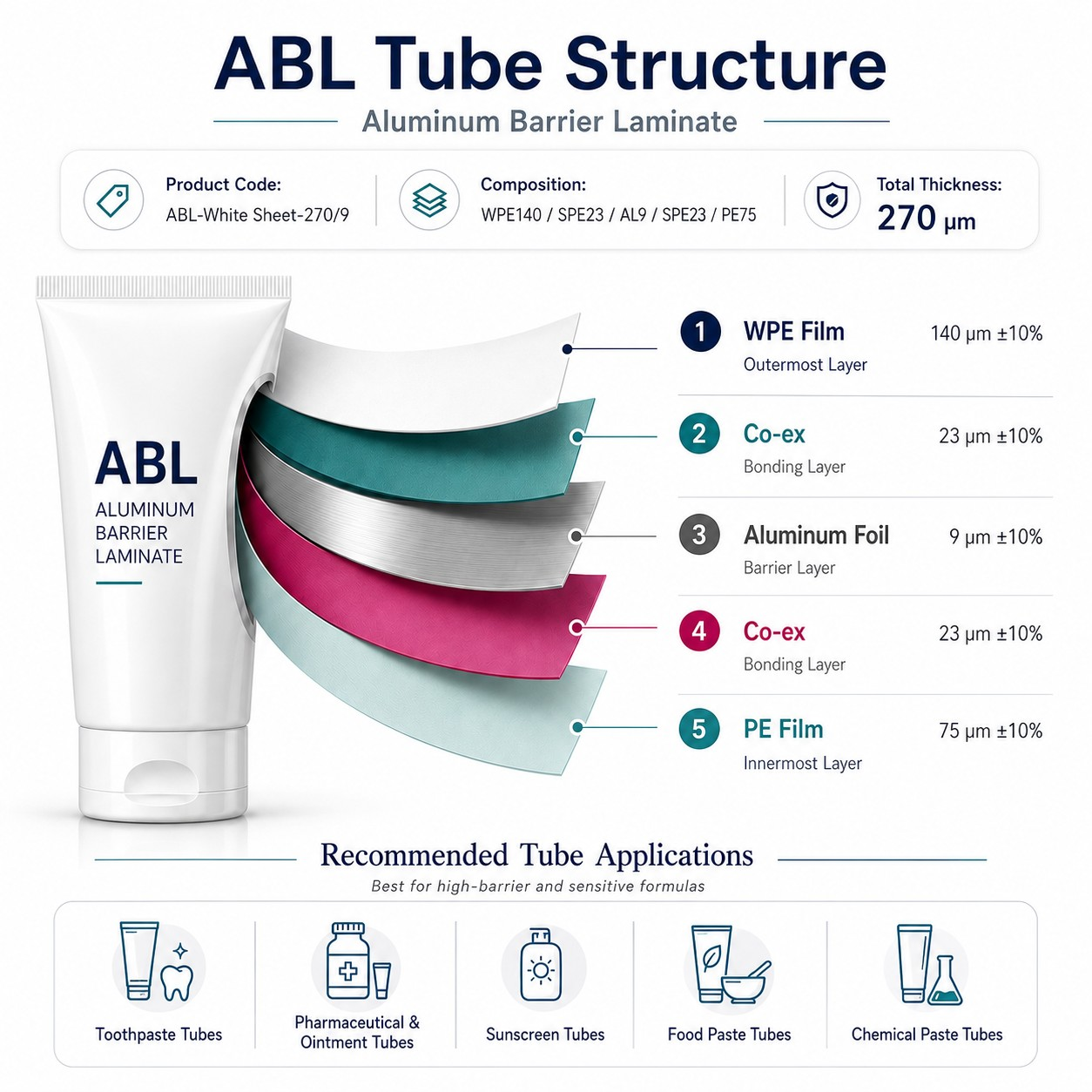 An illustrative view of a laminate tube structure; confirm the actual layer specification with the supplier.
ABL Tube vs. All-Aluminum Tube: The Core Difference
For aluminium tubes for cosmetics, the main comparison is material architecture. An all-aluminum collapsible tube uses metal as the principal body material. An ABL tube uses a laminate body with an aluminium barrier layer embedded in plastic layers. Both may be considered when a brand wants a tube format, but they should not be specified with the same assumptions about shoulder construction, feel, recovery after squeezing, printing process or end-of-life handling.
| Point to compare | ABL laminate tube | All-aluminum tube |
|---|---|---|
| Tube body | Multilayer laminate with aluminium foil in the structure | Predominantly aluminum body |
| Barrier discussion | Verify laminate structure and foil specification | Verify body, coating and closure system |
| Procurement focus | Layer structure, seal area, decoration and filling validation | Metal-body finish, lining, closure and filling validation |
| Environmental communication | Ask for local collection and material guidance for the full pack | Ask for the actual pack composition and local collection guidance |
This comparison is not a ranking. The appropriate choice for aluminium tubes for cosmetics depends on the formula, brand design, filling line and the claims a brand intends to make.
Why the Barrier Layer Matters for Cosmetic Formulas
Many buyers investigate aluminium tubes for cosmetics because certain formulas are sensitive to their package environment. An ABL structure may be considered where a project needs a stronger discussion of barrier performance than a basic plastic tube. However, no material label alone proves that a particular cream, gel, balm or treatment formula is suitable for a particular tube.
Formula-pack compatibility is a separate validation task. It can include observation of colour, odour, viscosity and package appearance, along with checks for swelling, deformation, leakage, seal performance and closure function. If a project changes its formula, fragrance level, pigments, preservative system, tube structure, cap or filling process, the validation plan may also need review. For aluminium tubes for cosmetics, request tests using the actual production-intent pack rather than relying only on a generic material statement.
A Procurement Checklist for ABL Cosmetic Tubes
When evaluating aluminium tubes for cosmetics, turn “ABL” into a written checklist. This helps the marketing, R&D, packaging and purchasing teams compare the same facts.
- Layer construction: Ask for the laminate description, including the barrier layer and any relevant thickness information.
- Product-contact side: Confirm the inner layer or lining that will contact the formula.
- Tube format: Confirm diameter, length, fill volume, shoulder style, nozzle orifice and cap type.
- Decoration: Align printing, colour references, finish and artwork approval requirements with the actual tube construction.
- Filling and sealing: Share expected filling temperature, viscosity range and sealing method, then confirm what needs testing.
- Compatibility plan: Define samples, storage conditions, review points and acceptance criteria before mass production.
- Environmental communication: Request guidance that describes the complete pack without assuming a universal disposal route.
For teams developing customized aluminium tubes for cosmetics, this list reduces the risk of accepting a material name without the details needed for an informed decision.
How to Read a Supplier Description Without Over-Assuming
A product title may combine material, capacity, closure and customization terms in a very compact way. Treat it as a starting point, not as evidence of every performance claim. For example, Baolilai lists a custom ABL tube with a pointed nozzle. The confirmed listing information establishes the availability of an ABL tube format and a stated 10 g–300 g capacity range; it does not by itself establish suitability for any individual cosmetic formula.
For aluminium tubes for cosmetics, ask the supplier to provide the actual construction and then review a representative sample. If visual impact is important, include the print and surface-finish sample in the approval set. If the product is sensitive, include the intended closure and filling process in the evaluation. That shift—from a material name to a testable specification—is usually more valuable than a broad claim about a package.
Choosing the Right Next Step
ABL means aluminum barrier laminate: a laminate tube structure that incorporates aluminium foil as a barrier layer. It is not synonymous with a solid-aluminum tube, and it should not be used as a shortcut for formula compatibility. When sourcing aluminium tubes for cosmetics, define the construction, confirm the dimensions and decoration, and validate the finished pack with the intended formula and process.
For early packaging development, prepare a concise inquiry containing the product type, fill weight, formula characteristics, preferred tube format, cap, artwork needs and target market. A packaging supplier can then help organize the specification discussion around a real project rather than an ambiguous material label.