
 EN

Sunblock Tube Packaging: What Cosmetic Brands Should Consider
A sun-care launch can look straightforward on a mood board and become complicated once the formula, filling line, artwork, and retail plan come together. For a cosmetic brand, a sunblock tube is not simply a container. It is the package consumers hold on a beach, carry in a bag, read in a store, and use when they need a controlled dose. The practical choice is to define the use occasion first, then verify that the tube body, cap, dispensing opening, and decoration work together.
For B2B buyers developing sunscreen and personal-care packs, the key is to turn broad preferences—portable, premium-looking, easy to squeeze—into a written specification. That makes conversations with the formula team, filling partner, designer, and tube supplier more focused from the first sample onward.
Start With the Product Scenario, Not the Tube Color
The same sunscreen formula may need different formats for daily use, travel, sampling, or a seasonal promotion. A small sunscreen tube can suit a trial set, an on-the-go item, or a gift-with-purchase program, while a larger format may suit a family or daily-use routine. Rather than selecting a capacity because it is familiar, map the intended use to the expected number of applications, target channel, price architecture, and bundle configuration.
That exercise also clarifies what information must fit on the pack. Sun-care products frequently need ingredient, directions, warning, batch, and market-specific information. A narrow tube may support a neat front panel but leave limited circumference for mandatory copy. Before approving artwork, review the actual printable area, seam location, shoulder shape, cap orientation, and the languages required for each destination market.
Where a brand needs a starting point for a custom format, it can review the available 15–60 ml cosmetic PE tube options as a discussion reference. The final format should still be confirmed against the actual formula, filling method, and artwork.
Match Capacity, Diameter, and Squeeze Feel
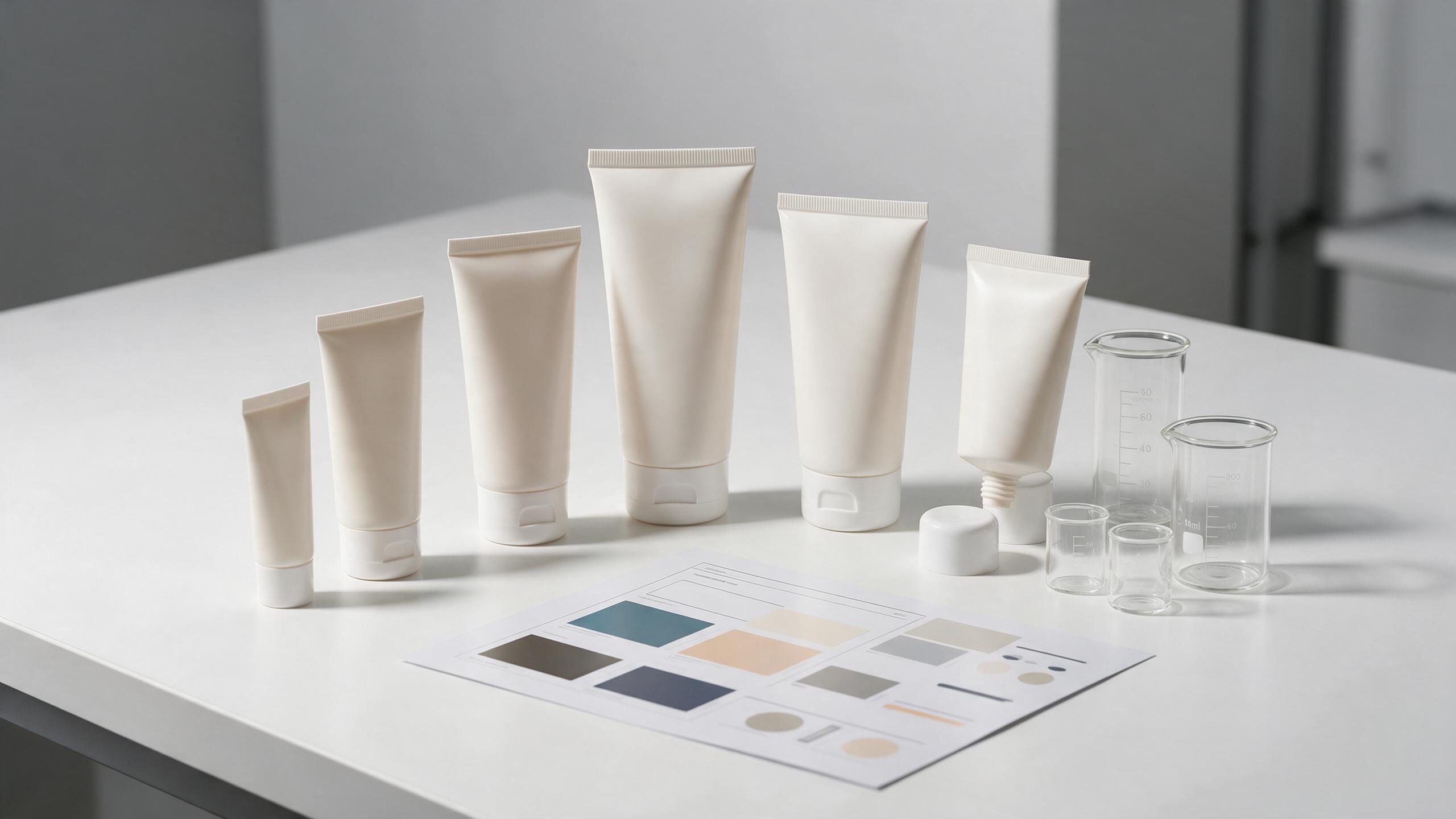
A sunblock tube needs to feel deliberate in the hand. Capacity, diameter, wall construction, and length influence how much product is dispensed, how the package stands or stores, and how much space remains for a legible design. A small format is not automatically easier to use: if the diameter, opening, and viscosity are poorly matched, dosing can feel inconsistent.
Build a simple comparison table during development:
| Decision area | Questions to confirm | Why it matters |
|---|---|---|
| Capacity | Is this for daily use, travel, sampling, or a promotion? | Sets product positioning and expected consumption. |
| Tube diameter and length | Will the format provide enough copy space and fit the intended secondary pack? | Affects artwork layout, shelf presence, and transport planning. |
| Squeeze feel | Does the tube dispense the formula smoothly through the chosen opening? | Connects formula viscosity with the user experience. |
| Closure and opening | Can the cap open, close, and protect the orifice through expected handling? | Supports controlled application and reduces mess during use. |
A useful sample review includes more than an empty tube. Fill representative units when possible, then test opening force, dispensing control, cap closure, panel appearance after handling, and performance after ordinary transport simulation. Packaging compatibility is specific to the formula and the complete packaging system, so a visually suitable sample is not a substitute for validation with the actual product.
Choose the Dispensing System Around Real Application Habits
Consumers may apply sunscreen at home, in a vehicle, at a pool, or while travelling. Those conditions shape the right sunblock tube opening. A flip-top cap can support one-handed use, while a screw cap may fit a different visual or cost direction. A narrow orifice can help control a thinner lotion; a wider opening may suit a denser cream. The appropriate option depends on the formula and should be checked in filled samples rather than assumed from an empty component.
Ask the development team to document the target amount per squeeze, the expected viscosity range, the filling process, and the cap torque or closure requirements used by the production line. This avoids a late-stage situation in which a selected cap looks appropriate but the product is difficult to dispense or the filling operation needs adjustment.
For a small sunscreen tube, cap proportions matter as much as function. An oversized cap can consume useful body space and shift the visual balance. A compact cap may preserve more room for artwork, but it still needs to be comfortable to open and robust enough for the intended distribution route.
Use Color and Decoration to Improve Recognition, Not to Replace Information
Color is often one of the first choices in a sunscreen brief. A sunscreen orange tube may signal energy, outdoor use, or a seasonal collection, while white, metallic, pastel, matte, or glossy finishes can support other brand directions. Color alone, however, does not solve the packaging brief. It should be reviewed alongside print legibility, contrast, finishing consistency, and the space needed for product information.
During artwork development, evaluate the tube as a curved object, not only as a flat digital layout. Small type near a seam, shoulder, or cap transition can be harder to read after production. Consider a physical or representative mock-up to check the hierarchy of the brand mark, product name, SPF-related claims supplied by the brand, use directions, and required local-language copy. A sunscreen orange tube can remain visually distinctive while its information architecture stays clear.
Surface finish also deserves a sample-stage review. Matte, glossy, soft-touch, and other decorative approaches may look different under store lighting, photography, handling, and transit friction. Agree on the appearance criteria using an approved physical reference, especially when a campaign relies on a precise brand color.
Plan Validation Before You Commit to Production
A reliable development plan considers the sunblock tube as part of a system: formula, tube, shoulder, cap, print, filling, carton, and shipping conditions. Stability and compatibility work can assess whether the formula and its package remain suitable together under conditions relevant to transport. The validation plan should be determined by the brand, formula owner, and relevant quality or regulatory teams.
- Formula-to-pack review: confirm that the actual sunscreen formula is assessed with the selected tube and closure combination.
- Filled-sample dispensing review: test smooth dosing, opening behavior, closure, and appearance after repeated normal use.
- Artwork proof review: check text, claims supplied by the brand, barcode placement, color references, and mandatory information on the curved pack.
- Filling-line review: align tube dimensions, shoulder and cap configuration, and sealing expectations with the planned filling process.
- Transit and shelf review: inspect scuffing, leakage, deformation, and presentation using conditions relevant to the planned route.
Keep version control for each approved point. A change in cap, finish, color, copy, or formula can affect the validity of earlier approvals. Clear records help the brand, purchasing team, and supplier identify which sample represents the current production specification.
A Practical Brief for Your Next Sun-Care Tube
Before requesting a quotation or sample, collect the information that turns a general request into a workable pack brief: target capacity, use occasion, formula type, intended markets, closure preference, artwork requirements, target finish, filling method, annual volume expectation, and validation needs. This does not lock every decision too early; it gives each party the same starting point for proposing a suitable sunblock tube.
For brands balancing daily, travel, and promotional formats, it is often helpful to compare related options in one sample round. Review a full-use format alongside a small sunscreen tube, then compare how the cap, opening, copy space, and visual identity behave at each size. If orange is part of the campaign direction, assess the sunscreen orange tube under the actual lighting and retail context where it will be seen.
The goal is not to select the most decorated tube or the smallest possible pack. It is to build a package that supports the formula, makes application manageable, carries clear brand information, and can be validated before volume production. When those decisions are documented early, cosmetic brands can move from a broad packaging idea to a controlled development process.
Sample Approval Checklist
Use one controlled sample review to confirm capacity, cap opening, dispensing, artwork position, color reference, and the version of the formula tested. Record each change so the approved sunblock tube specification remains clear before production planning.