
 EN

How to Choose a Screw Cap for a Toothpaste Tube
For a toothpaste brand, a tube screw cap is more than a closing part. It affects how cleanly the product is dispensed, how the pack feels in hand, how the tube looks on shelf, and how reliably the filled pack moves through handling and distribution. A cap that appears suitable in a drawing can still create issues if its neck fit, opening force, or filling-line behavior has not been checked with the actual tube and formula.
From a packaging-consultant perspective, a toothpaste tube closure should first match the formula, brand position, and filling method. For B2B buyers, the practical goal is not to select a cap in isolation, but to specify a tube screw cap system that can be sampled, evaluated, and repeated at the agreed production configuration.
Start With the Product and User Scenario
Before choosing a tube screw cap, define what the consumer will notice and what the filling team must handle. A daily toothpaste pack may need a familiar twist-off action and a dispensing opening that supports controlled ribbons of product. Travel sizes, children’s formats, whitening pastes, and thicker formulas can place different demands on the closure experience.
Also consider where the tube will be sold. A cap is part of the visible pack architecture: its height, diameter, color, finish, and ribbing can either support or dilute the label design. For brands serving multiple Southeast Asian markets, it is useful to check whether the chosen tube screw cap feels intuitive across the intended retail channels and whether the decoration remains legible when the cap and shoulder are viewed together.
Compare Common Screw-Cap Design Choices
A standard round cap is often appropriate when the priority is a straightforward, familiar closure. Ribbing or a striped outer surface can improve grip, especially when hands are wet. Taller caps can create more visual presence, while lower-profile caps may support a compact format. These choices should be judged alongside the tube diameter and shoulder shape rather than from a cap sample alone.
Thread engagement matters as much as the outer form. The tube screw cap and tube neck must be made as a matched connection so that the cap starts smoothly, seats consistently, and can be opened without an unexpectedly high or low turning feel. A linerless closure may rely on its molded geometry for sealing, while other configurations can use an additional sealing feature. The appropriate route depends on the formula, filling conditions, and validation results.
Do not assume that a closure style used for one personal-care item will behave the same way on toothpaste. Viscosity, residue around the orifice, consumer opening habits, and transport conditions can all change how a tube screw cap performs in use. Early samples should therefore include the intended tube material, neck finish, cap resin or color, and representative filling process.
Match the Cap to Capacity, Diameter, and Dispensing Needs
Capacity and diameter shape the closure decision. A larger toothpaste tube usually has a broader visual canvas and may call for a cap proportion that gives the pack a balanced base or head profile. A smaller pack can benefit from a compact closure that does not dominate the package. However, cap size is not simply a styling decision: the neck diameter, orifice size, and thread design need to work together.
The dispensing opening deserves a separate review. A smaller orifice can support measured dispensing for some formulas, whereas a larger opening may suit a thicker product or a different consumer experience. The right tube screw cap arrangement should be evaluated with the actual formula; a nominal drawing cannot show how readily the product emerges or how much residue remains at the outlet after repeated use.
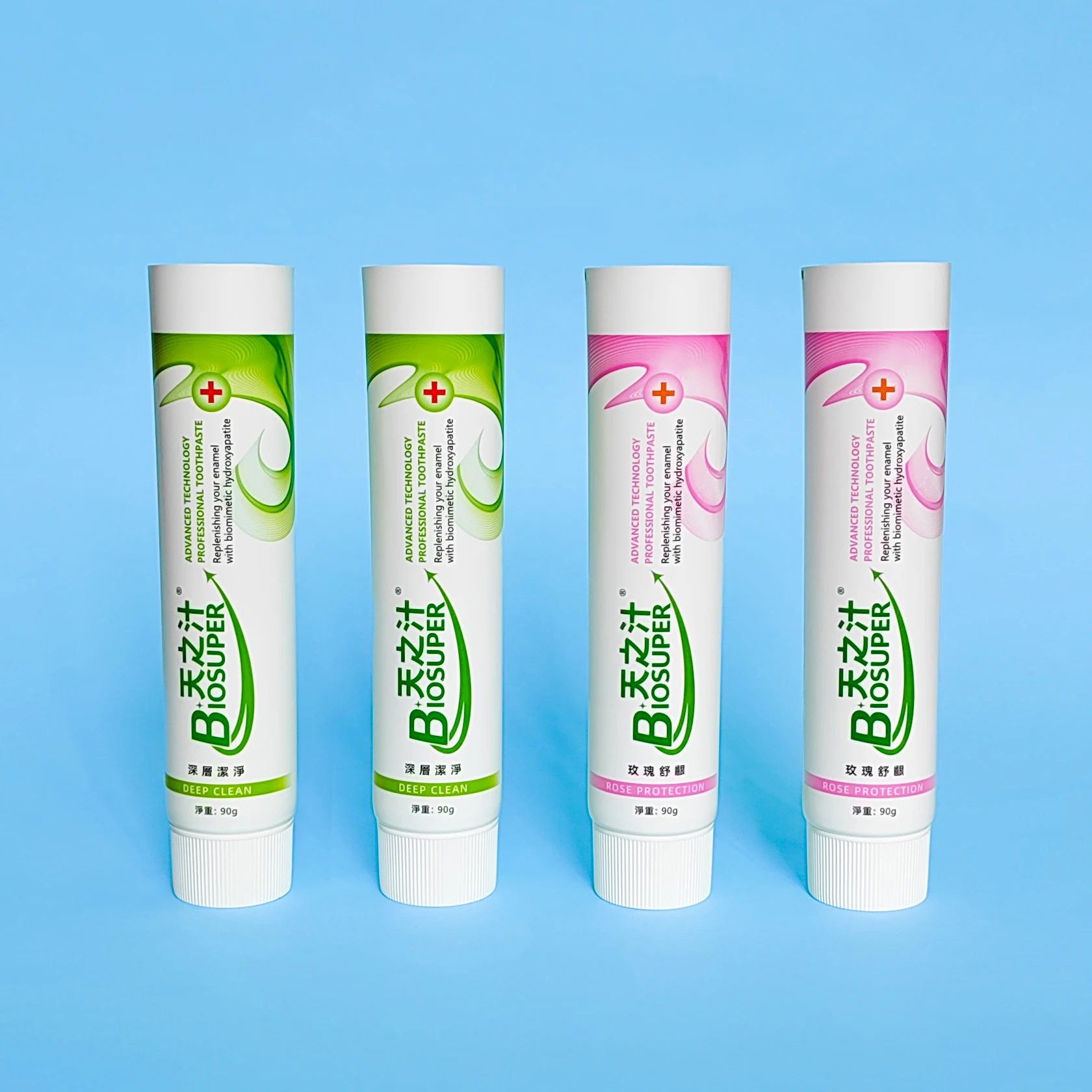
For a configuration reference, buyers can review a customized 100-gram aluminum-plastic toothpaste tube with screw cap and striped cover. The listed 35 mm diameter and screw-cap format illustrate why capacity, tube diameter, cap profile, and printing need to be confirmed as one package specification rather than as separate purchasing items.
Review Sealing and Leakage Risk as a System
Good closure design can help reduce leakage during transport, storage, and ordinary use, but it should not be represented as a universal outcome before testing. The relevant question is whether the selected tube screw cap achieves a repeatable fit under the formula, process, and distribution conditions that apply to the project.
Ask the supplier how the closure seats on the neck and what checks are used during development. Then build your own sample plan around realistic handling: upright and inverted storage, opening and reclosing cycles, filling-line application, shipment simulation where applicable, and inspection for residue around the orifice. If leakage control is the priority, first confirm the cap-to-neck connection and application settings; appearance alone is not enough.
Torque is another useful discussion point, but it is not a one-number rule for every toothpaste tube. Application torque and removal feel should be agreed for the specific cap, neck, tooling, and process. A tube screw cap that is too loose may create inconsistent seating, while one that is too tight may make the pack inconvenient to open. The sample stage is where that balance should be observed and documented.
Check Filling-Line Compatibility Before Final Approval
A tube screw cap can look correct in a hand sample and still need adjustment for automated or semi-automated filling. The cap supply method, orientation, capping head, application pressure, and output target all influence production behavior. For this reason, compatibility should be demonstrated with the actual tube construction and closure rather than inferred from nominal dimensions.
Share the key production facts early: tube diameter, length, material structure, shoulder and neck dimensions, cap style, target fill weight, formula behavior, line type, and desired decoration. If any of these inputs is still changing, treat the closure as provisional. That discipline can avoid late revisions to the tube screw cap or neck tooling after artwork and procurement are already moving.
Use a Clear Sampling and RFQ Checklist
When requesting quotations or samples, ask for a complete closure description instead of only naming a color or cap shape. A useful request covers the following points:
- Tube screw cap type, outer profile, color, finish, and grip treatment
- Tube diameter, neck and thread configuration, and intended orifice size
- Target fill weight and the formula characteristics relevant to dispensing
- Tube material structure, shoulder design, printing method, and artwork constraints
- Sample quantity and the checks required for opening feel, fit, and leakage review
- Filling-line details, trial timing, and any pack-out or distribution conditions to assess
Many buyers start with the exterior finish. In practice, they often obtain a more useful result by confirming compatibility first and decoration second. That order does not reduce creativity; it gives the brand a tube screw cap platform that the production team can validate.
Make the Final Choice With a Cross-Functional Review
The final choice should bring purchasing, packaging development, brand, and filling operations into the same conversation. Compare the cap options against a short set of agreed criteria: consumer opening experience, fit with the selected neck, dispensing control, shelf presentation, decoration alignment, sample observations, and line readiness. A structured comparison is more useful than choosing solely by a catalog image.
For many toothpaste projects, the right tube screw cap is the one that creates a balanced package decision across seal design, capacity fit, shelf appearance, and verified process compatibility. Confirm the details in a representative sample run, record the agreed specification, and use that record in the RFQ and production handoff. This approach gives teams a practical basis for selecting a toothpaste tube closure with fewer late-stage assumptions.